
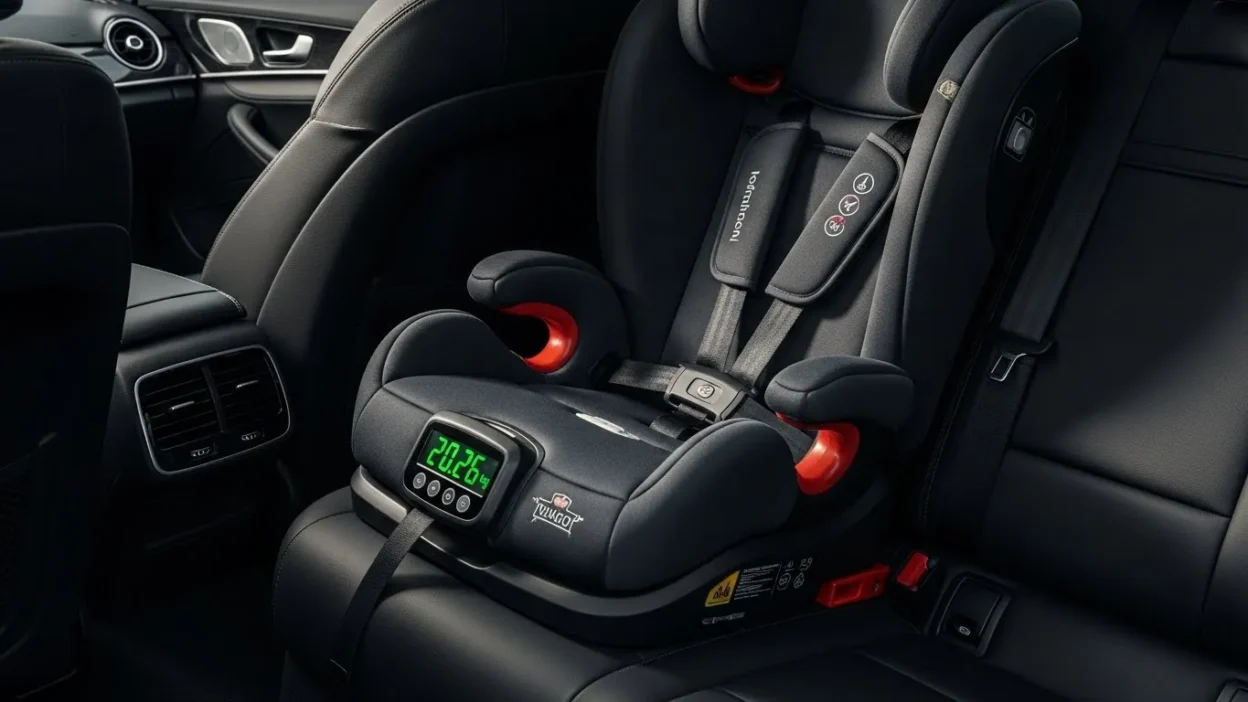
When it comes to keeping your child safe in the car, booster seat weight is one of the most important and often misunderstood factors.
Many parents assume age alone determines when a child should use a booster seat, but in reality, weight and height play a much bigger role in safety.
Using a booster seat too early or continuing to use one after your child has outgrown it can reduce protection during a crash.
Booster seats are designed to position the vehicle’s seat belt correctly across a child’s body, but they only work as intended when the child falls within the recommended weight limits.
From minimum weight requirements to maximum weight limits and manufacturer guidelines, understanding these details helps parents make confident, informed decisions.
In this guide, we’ll break down everything you need to know about booster seat weight — including safety rules, common mistakes, and how to tell when your child is truly ready to move on
Why Booster Seat Weight Matters for Child Safety
Booster seat weight matters because it directly affects how well a vehicle’s seat belt can protect your child during a sudden stop or crash. Unlike adult passengers, children’s bodies are still developing, and standard seat belts are designed for adult height and weight. A booster seat lifts and positions a child so the lap and shoulder belt sit in the safest possible places—across the upper thighs and the center of the chest, not the stomach or neck.
If a child is below the minimum booster seat weight, their body may not be strong enough to handle crash forces safely. In these cases, the seat belt can ride up onto the abdomen, increasing the risk of internal injuries. On the other hand, if a child exceeds the maximum weight limit, the booster seat may not provide proper support or structural protection, reducing its effectiveness in an accident.
Weight also influences posture. Children within the correct weight range are more likely to sit properly for the entire ride, keeping the belt in the right position. A child who is too small may slump, while a child who is too heavy may feel uncomfortable and shift the belt out of place.
Ultimately, booster seat weight isn’t just a recommendation—it’s a safety requirement backed by crash testing and real-world data. Following weight guidelines ensures the booster seat performs exactly as designed, giving your child the best possible protection every time you’re on the road.
What Is a Booster Seat? (Quick Overview for Parents)
A booster seat is a child safety device designed to elevate a child so that the vehicle’s seat belt fits properly over their body. Unlike infant or convertible car seats that have a built-in harness system, booster seats rely on the car’s existing seat belt to secure the child safely. The primary purpose of a booster seat is to position the lap belt across the upper thighs and the shoulder belt across the chest and shoulder, rather than the stomach or neck, which could cause serious injury in a crash.
Booster seats come in two main types: high-back boosters and backless boosters. High-back boosters provide head and neck support, making them ideal for vehicles without headrests or for younger children who still need extra support. Backless boosters are more portable and work best for older children who can sit upright without additional support, though they still ensure proper seat belt placement.
Parents often wonder when to start using a booster seat. Generally, children transition to a booster after they outgrow their forward-facing car seat with a harness, which usually happens between ages 4–7, depending on weight and height. However, age alone isn’t enough to determine readiness; weight and physical development are far more critical.
Using a booster seat too early can put a child at risk of injury, while using one beyond the weight limit can reduce effectiveness. Understanding what a booster seat does and how it works is the first step toward keeping your child safe, comfortable, and properly restrained during every car ride.
Minimum Weight Requirements for Booster Seats
Knowing the minimum weight for a booster seat is crucial for ensuring your child’s safety on the road. Most booster seats are designed for children who weigh at least 40 pounds (18 kg), though some high-back models may accommodate slightly lighter children starting around 30 pounds (13.5 kg). Using a booster seat before your child reaches the minimum weight can be dangerous, because the vehicle’s seat belt may not fit properly, leaving vital areas like the abdomen or neck vulnerable in a crash.
Weight is often more important than age when it comes to booster seat readiness. While many children transition around ages 4 to 7, a smaller child in this age range may still be too light for a booster. That’s why it’s essential to check both the manufacturer’s guidelines and your child’s current weight before making the switch.
Another factor to consider is posture. Children under the minimum weight may not have the torso strength to sit upright consistently, which is essential for proper seat belt positioning. If a child slouches or leans to one side, the lap belt can ride up onto the stomach, increasing the risk of serious injuries during sudden stops or accidents.
Parents should also keep in mind that car seat laws vary by region, but most safety organizations, including the American Academy of Pediatrics, emphasize weight over age as the primary factor. Checking the seat label or manual and monitoring your child’s growth ensures that the booster seat provides maximum protection.
By following minimum weight recommendations, parents can ensure that their child is both comfortable and safe, setting the foundation for correct seat belt use as they grow.
Maximum Weight Limits for Booster Seats
Just as minimum weight is essential, understanding the maximum weight limit for a booster seat is equally important to keep your child safe. Most booster seats are designed to safely accommodate children up to 80–100 pounds (36–45 kg), depending on the seat type and manufacturer. Exceeding this weight can reduce the booster seat’s effectiveness because the seat may no longer position the vehicle’s seat belt correctly or support the child’s body in a crash.
High-back boosters typically have slightly higher weight limits than backless boosters, and some heavy-duty models are specifically designed for larger children. Parents should always check the manufacturer’s label for the exact weight range, as not all booster seats are created equal. Using a booster seat beyond the recommended weight puts children at risk of injury, especially to the neck, chest, and abdomen, because the seat belt may ride incorrectly or the seat structure may not absorb impact as designed.
It’s also worth noting that weight limits are often paired with height limits. A child may reach the maximum weight before they reach the maximum height, or vice versa. In either case, using the booster seat beyond the manufacturer’s specifications compromises safety.
Parents should transition children who exceed the booster seat’s weight limit to a seat belt alone, but only if the belt fits properly across the chest and lap. Following these weight guidelines ensures that the booster seat continues to offer optimal protection, providing peace of mind for parents while keeping children safe on every trip.
Booster Seat Height vs Weight – Which Is More Important?
When it comes to booster seat safety, many parents wonder whether height or weight matters more. The truth is, both factors play a critical role, but weight often determines whether a booster seat will function as intended. Weight affects how the child sits in the booster and how the seat belt positions across their body. If a child is below the minimum weight, the belt may ride too high on the stomach or neck, increasing the risk of injury. If they exceed the maximum weight, the booster may no longer support proper belt placement, reducing its effectiveness in a crash.
Height is also essential because it ensures the shoulder belt crosses the chest at the correct angle. Even a child within the recommended weight range may be too short for a backless booster, which could cause the shoulder belt to rest on the neck. This is why high-back boosters are recommended for shorter children—they provide head and neck support while positioning the belt safely.
The most reliable indicator for booster seat readiness is belt fit, which considers both height and weight. A correctly fitted booster seat positions the lap belt snugly across the upper thighs and the shoulder belt across the middle of the chest. If the belt doesn’t sit properly in these positions, the child is either too small or too tall for the current booster.
Ultimately, parents should check both weight and height guidelines provided by the manufacturer, rather than relying on age alone. Ensuring proper fit keeps the booster seat effective and maximizes safety for every ride.
Types of Booster Seats and Their Weight Limits
Booster seats come in several types, each designed to meet the needs of children at different weights, heights, and developmental stages. Understanding these options helps parents choose the safest seat for their child.
High-Back Booster Seats are ideal for younger or smaller children. They typically accommodate kids starting at 30–40 pounds (13.5–18 kg) and can hold up to 80–100 pounds (36–45 kg). High-back boosters provide head and neck support, which is especially important in vehicles without adjustable headrests. They also help maintain proper posture, keeping the seat belt aligned correctly across the child’s chest and lap.
Backless Booster Seats, on the other hand, are best suited for older children who can sit upright without additional support. These usually accommodate children from 40 pounds (18 kg) up to 100 pounds (45 kg). Backless boosters are lightweight and portable, making them convenient for travel or switching between vehicles. However, they don’t offer head or neck support, so a child must be mature enough to sit still during the ride.
Combination Seats serve as both forward-facing harness seats and booster seats. Children start in the harness mode, typically until they reach 40–65 pounds (18–29 kg), and then transition to booster mode until reaching the maximum weight limit. These seats provide flexibility and longevity, allowing parents to use a single seat throughout multiple growth stages.
No matter the type, it’s essential to check the manufacturer’s weight and height limits, as they can vary significantly. Choosing the right booster seat based on your child’s weight ensures that the seat functions properly and keeps your child safe in every ride.
Booster Seat Weight by Age (General Guidelines)
While weight and height are the most important factors for booster seat safety, many parents find it helpful to understand general age ranges for guidance. Children typically transition from a forward-facing car seat with a harness to a booster seat between ages 4 and 7, depending on their growth and development. However, age alone should never be the deciding factor, because children of the same age can vary widely in weight and height.
For children ages 4–6, the typical weight range for a booster seat is 40–60 pounds (18–27 kg). At this stage, high-back boosters are often recommended to provide head, neck, and side support. Children in this range may still need reminders to sit upright to ensure the seat belt stays in the correct position.
Children ages 7–10 generally weigh 60–100 pounds (27–45 kg), making them suitable for either high-back or backless boosters. By this age, most children have developed enough torso strength to maintain proper posture, which keeps the lap belt across the upper thighs and the shoulder belt across the chest. Backless boosters are often more convenient for school-aged children who may need to move between vehicles.
Parents should also consider the child’s maturity and behavior. Even if a child meets the weight guidelines, a booster seat is ineffective if they slouch, twist, or remove the seat belt. The combination of weight, height, posture, and behavior is the safest guide for booster seat use.
By following these general guidelines and monitoring growth milestones, parents can ensure their child remains protected, comfortable, and properly restrained until they are ready for a regular seat belt.
Legal Booster Seat Weight Requirements (By Region)
In addition to safety guidelines, booster seat use is also governed by laws that vary by country and state, making it important for parents to understand local regulations. In the United States, most states require children to use a booster seat until they reach 8–12 years of age or until they meet specific height or weight requirements. While age is often mentioned in laws, many states specify weight minimums (typically around 40 pounds/18 kg) and sometimes height minimums (usually around 4 feet 9 inches/145 cm) as the legal threshold for moving out of a booster.
Internationally, rules differ. For example, in the United Kingdom, children must use a booster until they are 12 years old or 135 cm tall, whichever comes first. In Canada, provinces have their own regulations, but most emphasize booster seat use for children under 40–50 pounds (18–23 kg) and younger than 9 years old. Other countries may set maximum weight or height limits for booster seats, so parents traveling internationally should check local requirements.
It’s important to note that legal compliance does not always equal maximum safety. Many safety experts recommend continuing booster use beyond the legal minimums if the child has not yet reached the proper weight, height, or seat belt fit. Laws provide a baseline, but following manufacturer guidelines and child development milestones ensures your child is fully protected in every car ride.
By understanding both legal requirements and safety recommendations, parents can confidently make decisions that prioritize protection while remaining compliant with local regulations.
How to Check Your Booster Seat’s Weight Limit
Knowing the weight limit of your booster seat is essential to ensure your child’s safety. Every booster seat comes with a manufacturer-specified weight range, which can usually be found on a label attached to the seat or in the user manual. This label indicates both the minimum and maximum weight, as well as the recommended height range for safe use. Checking this information before each stage of your child’s growth helps prevent misuse and ensures the seat functions as designed.
If you’ve misplaced the manual, most manufacturers provide online PDFs or support pages where you can find weight and height specifications. Be careful when using second-hand or hand-me-down booster seats—older seats may have outdated or worn labels, and manufacturer guidelines can change over time. Always verify the limits before use.
Some booster seats also feature adjustable settings that accommodate a growing child, such as extendable armrests or height-adjustable backrests. While these features allow for more extended use, they do not change the weight limits. Exceeding the maximum weight can compromise structural integrity and reduce safety.
It’s also important to monitor your child’s posture and belt fit regularly. Even if a child is within the weight limit, improper belt positioning or slouching can reduce protection. Ensuring the lap belt sits across the upper thighs and the shoulder belt rests comfortably on the chest is just as important as following weight guidelines.
By consistently checking the booster seat label, manual, and belt fit, parents can ensure their child rides safely and comfortably at every stage of growth.
Common Booster Seat Weight Mistakes Parents Make
Even the most careful parents can make mistakes when it comes to booster seat weight, and these errors can compromise child safety. One of the most common mistakes is moving a child to a booster seat too early. Some parents assume that age alone determines readiness, but a child below the minimum weight may not sit properly or have enough torso strength to maintain correct belt positioning, putting them at risk in a crash.
Another frequent error is ignoring the maximum weight limit. Children can grow quickly, and parents sometimes continue using a booster seat beyond the recommended weight. When a child exceeds the booster’s maximum, the seat may no longer provide proper support, and the seat belt may sit incorrectly, increasing the risk of injury.
Parents also sometimes assume all booster seats are the same, failing to check the specific weight range for their child’s model. High-back boosters, backless boosters, and combination seats all have different weight and height limits. Using the wrong type of seat for a child’s weight can reduce safety.
Finally, improper belt fit is a common issue. Even if the child is within the recommended weight, slouching or twisting can cause the lap belt to ride up on the stomach or the shoulder belt to rub the neck.
To avoid these mistakes, parents should regularly check the booster seat label, consult the manual, and monitor their child’s growth and posture. By doing so, they ensure the booster seat provides optimal protection while complying with safety guidelines.
Safety Tips for Proper Booster Seat Use
Using a booster seat correctly is just as important as choosing one that matches your child’s weight and height. Proper use ensures maximum protection and reduces the risk of injury during a crash. The first safety tip is to always place the booster seat in the back seat of the vehicle. The back seat is the safest location for children under 13 years old because it keeps them away from airbags and frontal impact zones.
Next, ensure the seat belt fits correctly every time. The lap belt should sit snugly across the upper thighs, not the stomach, and the shoulder belt should cross the chest and shoulder, never the neck or face. High-back boosters can help maintain proper belt positioning for younger or shorter children, especially in cars without headrests.
Encourage your child to sit upright at all times. Slouching or leaning forward can cause the seat belt to ride incorrectly, reducing its protective effect. Avoid letting children use booster seats with heavy coats or bulky clothing, as these can prevent the belt from fitting snugly.
Another tip is to regularly check the booster seat for wear and tear. Cracks, broken parts, or loose components can compromise safety, so replace the seat if any damage is found. Finally, follow the manufacturer’s instructions for installation and weight limits carefully, and never use a booster seat that is too small or too large for your child.
By following these safety tips, parents can ensure their child is comfortable, properly restrained, and fully protected on every trip. Proper use maximizes the booster seat’s effectiveness and provides peace of mind for families.
Signs Your Child Is Ready to Stop Using a Booster Seat
Knowing when a child can safely stop using a booster seat is just as important as knowing when to start. While weight and height are primary factors, observing proper seat belt fit and posture is key to determining readiness. Most children are ready to transition from a booster seat once they reach around 80–100 pounds (36–45 kg) and are tall enough for the seat belt to fit correctly without assistance.
A simple test is the five-step seat belt fit check:
- The child’s back should rest comfortably against the vehicle seat.
- The knees should bend naturally at the edge of the seat without sliding forward.
- The lap belt should lie snugly across the upper thighs, not the stomach.
- The shoulder belt should cross the middle of the chest and shoulder, not the neck or face.
- The child should be able to sit like this for the entire trip without slouching or leaning forward.
If a child meets all five criteria, they can usually ride safely without a booster seat. However, behavior and maturity also matter. Children must be able to remain seated correctly for the duration of the ride, as belt misuse can reduce safety.
Parents should also consult the vehicle and booster seat manuals, as some cars have specific recommendations or booster seat requirements based on seat design. Transitioning too early can increase risk, so careful observation of weight, height, posture, and behavior ensures the child moves safely to a standard seat belt.
Following these signs allows parents to confidently know when their child is ready to stop using a booster seat without compromising safety.
How to Choose the Right Booster Seat Based on Weight
Choosing the right booster seat for your child starts with understanding their current weight and how it fits within the seat’s recommended range. Every booster seat comes with manufacturer-specified minimum and maximum weight limits, which are designed to ensure the seat positions the seat belt correctly and provides optimal protection. Selecting a seat that matches your child’s weight ensures the lap and shoulder belts fit properly, reducing the risk of injury during a crash.
The first step is to check the label or manual for weight specifications. High-back boosters often support a wider range for younger children, while backless boosters are ideal for older, heavier kids. Parents should also consider adjustable features, such as extendable armrests, height-adjustable headrests, or belt guides, which help accommodate growth within the seat’s weight limit.
It’s also important to consider the child’s posture and comfort. A booster that is too small may cause slouching, while one that is too large may prevent proper seat belt alignment. Comfort encourages children to sit upright for the entire ride, keeping the belt in the safest position.
Finally, factor in vehicle compatibility. Some boosters fit better in certain car models, so always test the seat in your vehicle before purchase. Checking online reviews and safety ratings can help identify models that maintain correct seat belt positioning across a wide range of weights.
By prioritizing weight, comfort, adjustability, and vehicle fit, parents can select a booster seat that ensures safety, supports growth, and provides peace of mind on every journey.
FAQs
Parents often have questions about booster seat weight, and getting clear answers can help ensure their child’s safety. Here are some of the most common questions:
1. What is the minimum weight for a booster seat?
Most booster seats have a minimum weight of 40 pounds (18 kg), though some high-back models accommodate children as light as 30 pounds (13.5 kg). Using a booster below the minimum weight can prevent proper seat belt positioning, increasing injury risk.
2. What is the maximum weight for a booster seat?
Booster seats typically support children up to 80–100 pounds (36–45 kg), depending on the type. Exceeding this weight reduces the seat’s ability to position the belt correctly, which can compromise safety.
3. Can my child use a booster seat if they are tall but underweight?
Even if a child is tall, weight is crucial. Children below the minimum weight may not have the torso strength to sit upright consistently, which is essential for proper belt fit.
4. Is height or weight more important for booster seat safety?
Both matter, but weight determines how well the seat functions, while height ensures proper belt positioning. Always follow both manufacturer height and weight guidelines.
5. When can a child stop using a booster seat?
Children are ready to transition once the seat belt fits properly without assistance, they maintain correct posture, and they meet the maximum weight and height requirements.
By understanding these FAQs and checking both the manufacturer guidelines and your child’s growth, parents can make informed decisions, ensuring their child is safe, comfortable, and properly restrained on every ride.
Conclusion
Booster seat weight is more than just a number—it’s a critical factor in keeping your child safe during every car ride.
Following the minimum and maximum weight limits ensures that the seat belt fits correctly, the booster provides proper support, and your child is protected in the event of a crash.
Using a booster too early or continuing beyond the recommended weight can reduce the seat’s effectiveness and increase the risk of injury.
Parents should remember that weight and height together determine readiness.
While age can provide a rough guideline, relying on it alone is not enough. Checking the booster seat label, consulting the manual, and monitoring your child’s posture and behavior are essential steps for making safe decisions.
A properly fitted booster seat positions the lap belt across the upper thighs and the shoulder belt across the chest, which is the most effective way to protect growing children.
Choosing the right booster seat also involves selecting the correct type—high-back, backless, or combination—based on your child’s weight, comfort, and vehicle compatibility.
Regularly reviewing the seat’s condition, weight limits, and proper installation ensures that the booster continues to perform as designed.
Ultimately, understanding booster seat weight and adhering to manufacturer guidelines and safety recommendations gives parents confidence that their child is riding safely.
By paying close attention to weight, height, posture, and fit, you can provide your child with the protection they need as they grow, making every journey in the car safer and worry-free.

Hi, I’m Maya Angelou, and I’m thrilled to welcome you to Crushlinez! I created this space because I love helping people express themselves with clever, funny, and flirty lines.