
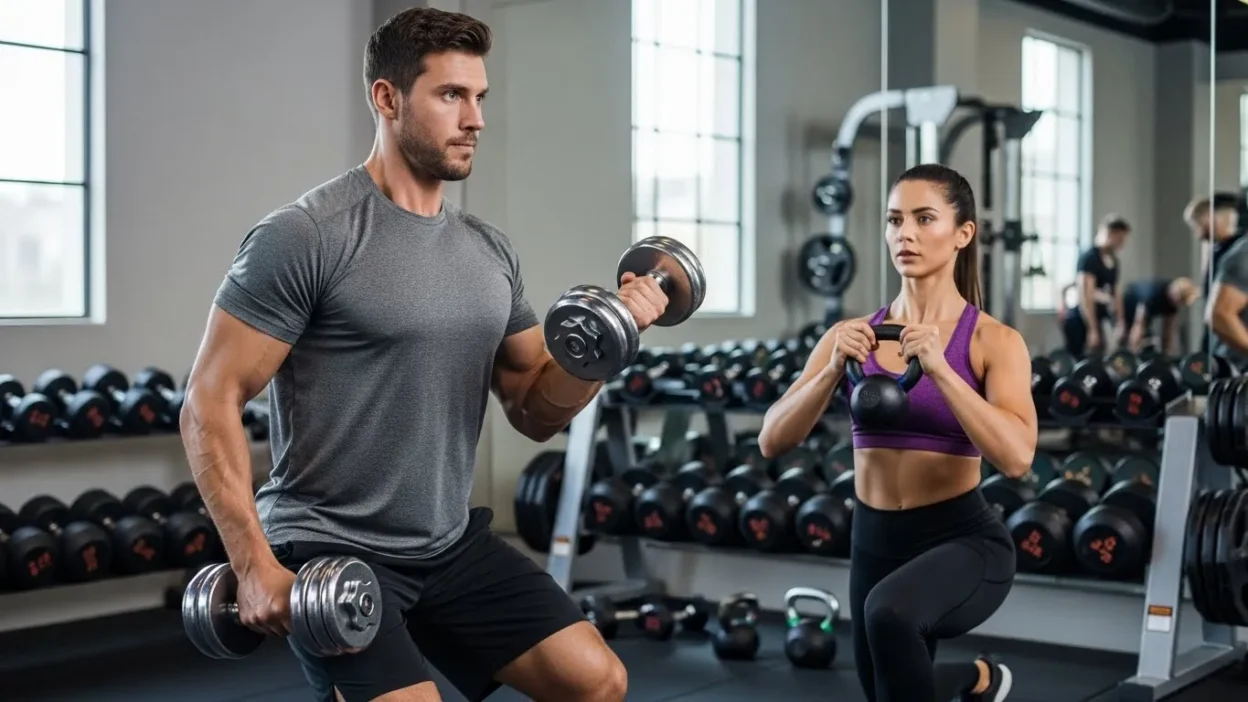
Free weight exercises are a cornerstone of strength training, offering a versatile and effective way to build muscle, improve balance, and enhance overall fitness.
Unlike machines, free weights such as dumbbells, barbells, and kettlebells engage multiple muscle groups simultaneously, promoting functional strength that translates to everyday movements.
If you’re a beginner starting at home or an experienced athlete in the gym, incorporating free weights into your routine can help you achieve your fitness goals more efficiently.
Beyond muscle growth, these exercises improve coordination, core stability, and joint health while offering the flexibility to perform a wide range of movements.
From full-body workouts to targeted isolation exercises, free weights provide endless options for progression, variety, and challenge.
This guide will cover everything you need to know benefits, types of exercises, workout plans, safety tips, and advanced techniques so you can confidently start or level up your free weight training journey.
Benefits of Free Weight Exercises
Free weight exercises offer a wide range of benefits that go beyond simple muscle building. One of the most significant advantages is strength development. Because free weights require you to control the weight through its full range of motion, multiple muscle groups are engaged simultaneously, leading to faster and more balanced strength gains compared to machine exercises. Compound movements like squats, deadlifts, and bench presses target several muscles at once, making workouts efficient and functional.
Another key benefit is improved balance and coordination. Unlike fixed machines, free weights require stabilizing muscles to engage, which strengthens the core and enhances overall body control. This functional strength translates into daily activities, sports performance, and injury prevention.
Free weight training also supports joint health and mobility. Controlled movement patterns help improve flexibility and range of motion while reducing the risk of stiffness often associated with sedentary lifestyles. Additionally, lifting free weights increases bone density, making it an excellent choice for long-term skeletal health.
Beyond physical improvements, free weight exercises offer mental benefits. The challenge of lifting weights, tracking progress, and achieving new personal records can boost confidence, discipline, and focus.
Finally, free weights are versatile and cost-effective. A small set of dumbbells or a barbell can provide an almost limitless variety of exercises, making them perfect for both home and gym workouts. Whether your goal is strength, fat loss, or functional fitness, free weights provide a reliable and adaptable training solution.
Types of Free Weight Exercises
Free weight exercises can be categorized into several types, each offering unique benefits for strength, muscle growth, and overall fitness. Understanding these categories helps you create a balanced and effective workout routine.
1. Compound Exercises
Compound movements involve multiple joints and muscle groups, making them highly effective for building overall strength. Examples include squats, deadlifts, bench presses, overhead presses, and rows. These exercises engage the legs, back, chest, arms, and core simultaneously, promoting functional strength and efficient calorie burn.
2. Isolation Exercises
Isolation exercises target a single muscle group, allowing for focused development. Common examples are bicep curls, tricep extensions, lateral raises, and calf raises. These exercises are ideal for refining muscle shape, improving symmetry, and addressing weaker areas in your body.
3. Kettlebell Exercises
Kettlebells combine strength and cardiovascular training, offering a dynamic approach to fitness. Movements like kettlebell swings, goblet squats, and Turkish get-ups enhance endurance, stability, and core strength while also improving explosive power.
4. Dumbbell Variations
Dumbbells provide versatility and allow for unilateral training, which helps correct strength imbalances between sides. Exercises such as single-arm presses, renegade rows, and lunges challenge balance, coordination, and stability.
By incorporating a mix of these free weight exercises, you can target all major muscle groups, improve functional strength, and prevent workout plateaus. A well-rounded routine should include both compound and isolation movements, as well as dynamic kettlebell or dumbbell variations to maximize results and maintain interest in your training.
Free Weight Training Tips for Beginners
Starting a free weight routine can be intimidating for beginners, but with the right approach, it becomes safe, effective, and enjoyable. One of the most important tips is to focus on proper form and technique. Using correct posture and controlled movements not only maximizes muscle engagement but also reduces the risk of injury. Beginners should start with lighter weights to master form before gradually increasing the load.
Consistency is key. A beginner should aim for 2–4 free weight sessions per week, allowing rest days in between for muscle recovery. It’s better to perform fewer exercises correctly than to rush through many with poor form.
Incorporating full-body movements is highly recommended for beginners. Exercises like squats, lunges, push-ups with dumbbells, and rows engage multiple muscle groups, making workouts efficient and functional. Isolation exercises can be added later to target specific muscles as strength and confidence improve.
Warm-up and cool-down routines are essential. Spend 5–10 minutes warming up with light cardio or dynamic stretches to prepare muscles and joints. After training, stretching helps reduce soreness and improves flexibility.
Tracking progress is another helpful tip. Logging weights, reps, and sets allows beginners to monitor improvement over time and ensures steady progression.
Finally, listen to your body. Mild muscle fatigue is normal, but sharp pain or discomfort is a warning sign. Start slow, be patient, and gradually build strength. With consistency, proper form, and progressive overload, beginners can safely and effectively reap the benefits of free weight training.
Designing a Free Weight Workout Plan
Creating a structured free weight workout plan is essential for consistent progress and achieving fitness goals. A well-designed program balances strength, muscle growth, and recovery, ensuring all major muscle groups are trained efficiently.
1. Choose a Workout Split
Beginners often benefit from full-body workouts, performing exercises that target all major muscle groups in a single session, 2–3 times per week. Intermediate and advanced lifters can use upper/lower splits or push/pull/legs routines, which allow for more focused training and higher volume per muscle group.
2. Select Exercises Wisely
Include a combination of compound exercises like squats, deadlifts, bench presses, and rows to engage multiple muscles at once, and isolation exercises like bicep curls or tricep extensions for targeted development. Incorporating kettlebell or dumbbell variations can enhance balance, stability, and functional strength.
3. Determine Sets and Reps
For strength: 4–6 reps per set with heavier weights.
For hypertrophy (muscle growth): 8–12 reps with moderate weights.
For endurance: 15–20 reps with lighter weights. Beginners should start with 2–3 sets per exercise and increase gradually.
4. Track Progress
Logging exercises, weight used, and repetitions helps monitor improvements and ensures gradual progression, which is crucial for avoiding plateaus.
5. Incorporate Rest and Recovery
Allow at least 48 hours before retraining the same muscle group. Rest days, proper nutrition, and sleep are essential for recovery and growth.
By following a structured plan, you can systematically build strength, improve muscle tone, and enhance overall fitness while minimizing the risk of injury.
Advanced Free Weight Training Techniques
Once you’ve built a solid foundation with basic free weight exercises, incorporating advanced training techniques can help break plateaus, increase strength, and accelerate muscle growth. These strategies are ideal for intermediate and experienced lifters who want to take their workouts to the next level.
1. Progressive Overload
Progressive overload is the principle of gradually increasing the stress placed on your muscles. This can be achieved by adding more weight, increasing repetitions, or performing more sets over time. Consistent overload ensures continuous muscle adaptation and strength gains.
2. Supersets and Compound Sets
Supersets involve performing two exercises back-to-back without rest, often targeting opposing muscle groups (e.g., biceps and triceps). Compound sets focus on two exercises for the same muscle group, increasing intensity and promoting hypertrophy. Both methods save time and boost workout efficiency.
3. Drop Sets
Drop sets are performed by completing a set to near failure, reducing the weight, and immediately continuing with more reps. This technique increases muscular endurance and stimulates growth by fully fatiguing the muscles.
4. Unilateral Training
Training one side of the body at a time—such as single-arm dumbbell presses or single-leg lunges—corrects strength imbalances and enhances coordination and stability.
5. Periodization
Periodization involves varying volume, intensity, and exercise selection over weeks or months. Structured cycles of heavy, moderate, and light training help prevent overtraining while promoting long-term progress.
By integrating these techniques into your free weight routine, you can challenge your muscles in new ways, enhance overall performance, and achieve better results, whether your goal is strength, size, or athletic conditioning.
Safety and Common Mistakes in Free Weight Training
While free weight exercises are highly effective, improper form, overtraining, or neglecting safety measures can lead to injuries. Understanding common mistakes and implementing safety practices is crucial for long-term progress.
1. Improper Form and Technique
One of the most frequent errors is using poor form, such as rounding the back during deadlifts or flaring elbows on presses. This can strain joints and muscles, increasing injury risk. Beginners should prioritize proper posture and controlled movements over lifting heavy weights.
2. Lifting Too Heavy, Too Soon
Jumping to heavier weights before mastering technique can cause muscle strains or joint injuries. Start with lighter weights, gradually increase the load, and focus on consistency.
3. Neglecting Warm-Up and Cool-Down
Skipping warm-ups or stretches can lead to stiffness and reduced range of motion. A proper warm-up with dynamic movements prepares muscles for lifting, while a cooldown and static stretches aid recovery.
4. Overtraining
Training the same muscles daily without sufficient rest prevents recovery, hampers gains, and increases fatigue. Ensure at least 48 hours of rest between intense sessions for each muscle group.
5. Ignoring Safety Equipment
When lifting heavy, using a bench with supports, a weight collar, or a spotter can prevent accidents. Safety equipment protects both beginners and advanced lifters.
6. Not Listening to Your Body
Pain is a signal, not something to push through. Mild muscle fatigue is normal, but sharp pain indicates a problem. Stop the exercise and assess before continuing.
By focusing on proper form, gradual progression, adequate rest, and using safety measures, you can minimize injury risks and make free weight training a safe, effective, and sustainable part of your fitness journey.
Free Weight Exercises for Specific Goals
Free weight exercises can be tailored to match various fitness goals, whether your aim is muscle building, fat loss, improving core strength, or enhancing athletic performance. Choosing the right exercises and training style ensures you achieve results efficiently.
1. Muscle Building and Strength
For hypertrophy and strength gains, focus on compound lifts such as squats, deadlifts, bench presses, and overhead presses. These exercises engage multiple muscle groups simultaneously, maximizing growth. Moderate to heavy weights with 8–12 repetitions per set, combined with progressive overload, are ideal for building muscle.
2. Fat Loss and Conditioning
To burn fat, combine free weight exercises with high-intensity intervals or circuit training. Moves like dumbbell thrusters, kettlebell swings, and renegade rows elevate heart rate while building strength. Higher repetitions (15–20) with shorter rest periods improve muscular endurance and calorie burn.
3. Core Strength and Stability
Exercises targeting the core, such as Russian twists, weighted planks, and single-arm dumbbell presses, enhance stability and improve posture. Core strength is crucial for overall functional fitness and injury prevention.
4. Athletic Performance
Athletes can benefit from explosive free weight movements like kettlebell swings, jump squats with dumbbells, and clean and presses. These exercises improve power, coordination, and agility, enhancing performance in sports and daily activities.
5. Rehabilitation and Mobility
Light free weights and controlled movements support joint health, mobility, and injury recovery. Movements like goblet squats, single-leg deadlifts, and lateral raises strengthen muscles without overloading joints.
By customizing your free weight routine to your specific goal, you can maximize effectiveness, stay motivated, and enjoy consistent progress in your fitness journey.
Free Weight Equipment Essentials
To get the most out of your free weight workouts, having the right equipment is essential. The good news is that you don’t need a fully stocked gym—just a few versatile tools can provide an effective and varied training experience.
1. Dumbbells
Dumbbells are the most versatile piece of free weight equipment. They allow for a wide range of exercises targeting all major muscle groups. Beginners can start with a set of light to moderate weights, while adjustable dumbbells are ideal for saving space and increasing resistance as you progress.
2. Barbells and Weight Plates
Barbells are essential for heavy compound lifts like squats, deadlifts, and bench presses. Pairing them with weight plates allows for gradual progressive overload, crucial for building strength and muscle mass. Standard or Olympic barbells can be chosen based on space and lifting goals.
3. Kettlebells
Kettlebells combine strength and cardio training, perfect for explosive movements and functional fitness. Exercises like kettlebell swings, goblet squats, and Turkish get-ups improve power, stability, and endurance.
4. Benches and Mats
A sturdy bench is necessary for presses, rows, and step-ups, while exercise mats provide comfort and stability for floor-based exercises. Adjustable benches allow for incline, decline, and flat positions to target muscles differently.
5. Accessories and Safety Gear
Items like weight collars, lifting straps, and resistance bands enhance safety and allow for more advanced training techniques. Proper storage solutions, such as racks or stands, help keep your equipment organized and accessible.
With this essential equipment, you can create an effective home or gym workout routine that targets all muscle groups, supports progression, and ensures safety while lifting. Free weights are adaptable, making them a long-term investment in your fitness journey.
Nutrition and Recovery for Free Weight Training
Proper nutrition and recovery are just as important as your free weight workouts. Even the most well-designed routine will produce limited results without fueling your body and allowing it to recover.
1. Nutrition for Strength and Muscle Growth
Protein is essential for muscle repair and growth. Include sources like lean meats, eggs, dairy, legumes, and protein shakes to meet daily requirements. Carbohydrates provide energy for intense workouts, so incorporate whole grains, fruits, and vegetables to fuel performance. Healthy fats, found in nuts, seeds, avocado, and olive oil, support hormone regulation, which is vital for strength and recovery.
2. Hydration
Staying hydrated is crucial. Water helps regulate body temperature, supports nutrient transport, and aids muscle function. Drink water before, during, and after workouts to maintain optimal performance and recovery.
3. Rest and Sleep
Muscles grow and repair during rest, not during exercise. Aim for 7–9 hours of quality sleep per night. Rest days are equally important to prevent overtraining and allow the body to recover from the stress of lifting.
4. Active Recovery and Mobility
Incorporate light activities like walking, yoga, or stretching on rest days. These practices improve circulation, reduce muscle soreness, and maintain flexibility, which enhances overall performance.
5. Supplements (Optional)
Supplements like whey protein, creatine, or branched-chain amino acids (BCAAs) can support performance and recovery, but they should complement a balanced diet, not replace it.
By combining proper nutrition, hydration, and recovery strategies with your free weight routine, you can maximize strength gains, reduce fatigue, and maintain long-term progress in your fitness journey.
Sample Free Weight Workout Routines
Having a structured routine is key to making progress with free weight training. Here are sample routines tailored for different fitness levels and goals.
1. Beginner Full-Body Routine
- Squats: 3 sets of 10 reps
- Dumbbell Bench Press: 3 sets of 10 reps
- Dumbbell Rows: 3 sets of 10 reps
- Dumbbell Shoulder Press: 3 sets of 12 reps
- Bicep Curls: 2 sets of 12 reps
- Tricep Extensions: 2 sets of 12 reps
Perform this routine 2–3 times per week, leaving at least one rest day between sessions. Focus on proper form and controlled movements.
2. Intermediate Upper/Lower Split
Upper Body Day:
- Bench Press: 4 sets of 8–10 reps
- Dumbbell Rows: 4 sets of 8–10 reps
- Shoulder Press: 3 sets of 10–12 reps
- Bicep Curls: 3 sets of 12 reps
- Tricep Dips: 3 sets of 12 reps
Lower Body Day:
- Squats: 4 sets of 8–10 reps
- Deadlifts: 3 sets of 8–10 reps
- Lunges: 3 sets of 12 reps per leg
- Calf Raises: 3 sets of 15–20 reps
Alternate upper and lower body days 3–4 times per week, ensuring rest days as needed.
3. Advanced Push/Pull/Legs Routine
- Push Day: Bench Press, Overhead Press, Tricep Extensions, Lateral Raises
- Pull Day: Deadlifts, Pull-Ups, Dumbbell Rows, Bicep Curls
- Legs Day: Squats, Lunges, Romanian Deadlifts, Calf Raises
This advanced routine allows higher volume and intensity, ideal for experienced lifters seeking strength and hypertrophy.
By following these sample routines, you can target all major muscle groups, gradually increase resistance, and achieve consistent progress in strength, muscle growth, and overall fitness.
FAQs
Many people have questions when starting or advancing in free weight training. Here are answers to the most common queries:
1. How often should I lift free weights?
Beginners can train 2–3 times per week, focusing on full-body workouts. Intermediate and advanced lifters may train 4–6 times weekly using split routines, allowing adequate recovery for each muscle group.
2. Can I build muscle with just dumbbells at home?
Yes. Dumbbells are highly versatile and allow for progressive overload, compound and isolation exercises, and unilateral movements. Consistency, proper form, and gradual weight increases are key for muscle growth.
3. How do I prevent injuries while lifting?
Prioritize proper technique, controlled movements, and gradual progression. Warm up before lifting, cool down after, and listen to your body. Avoid lifting weights that are too heavy and use spotters or safety equipment for heavy lifts.
4. Free weights vs machines: which is better?
Both have benefits. Free weights improve functional strength, balance, and coordination, while machines provide guided movement, which can be safer for beginners or rehabilitation. Combining both can optimize results.
5. Will lifting free weights make women bulky?
No. Due to hormonal differences, women generally do not bulk like men. Free weight training builds toned, strong muscles and improves metabolism, posture, and functional fitness.
6. How many sets and reps should I do?
For beginners, 2–3 sets of 8–12 reps per exercise is ideal. For muscle growth, 3–4 sets of 8–12 reps; for strength, 4–6 reps with heavier weights; and for endurance, 15–20 reps with lighter weights.
By understanding these FAQs, beginners and advanced lifters can train safely, effectively, and confidently while achieving their fitness goals.
Conclusion
Free weight exercises are an essential component of any effective fitness program, offering unmatched versatility, functional strength, and overall health benefits.
If you are a beginner lifting light dumbbells at home or an advanced athlete performing heavy barbell lifts, free weights allow you to target all major muscle groups, improve balance, enhance core stability, and increase joint strength.
Unlike machines, free weights engage stabilizing muscles, making movements more functional and applicable to daily activities and sports performance.
In addition to building strength and muscle, free weight training supports fat loss, improves posture, and boosts mental focus and confidence.
By combining compound and isolation exercises, beginners and experienced lifters alike can create balanced routines that meet specific fitness goals, from hypertrophy and strength gains to fat loss and endurance.
Advanced techniques like supersets, drop sets, and unilateral exercises provide further challenges for continuous progression.
Safety, proper form, and recovery are crucial to maximizing results and preventing injury.
Warming up, gradually increasing weights, maintaining proper posture, and prioritizing rest and nutrition ensure long-term progress.
Essential equipment such as dumbbells, barbells, kettlebells, and benches allows for effective home or gym workouts without breaking the bank.
Ultimately, consistency and smart programming are the keys to success.
By incorporating free weight exercises into your regular routine, tracking progress, and tailoring workouts to your goals, you can achieve sustainable strength, muscle growth, and overall fitness.
Start today, stay committed, and enjoy the transformative benefits of free weight training.

Hi! I’m Ella Johnson, the voice behind Crushlinez. I love sharing fun, flirty, and creative pick up lines to help you charm, laugh, and connect. On Crushlinez, I bring you the best lines for every mood, whether it’s cute, funny, or romantic. My goal is to make flirting fun, easy, and full of smiles—one line at a time!https://crushlinez.com/https://crushlinez.com/