
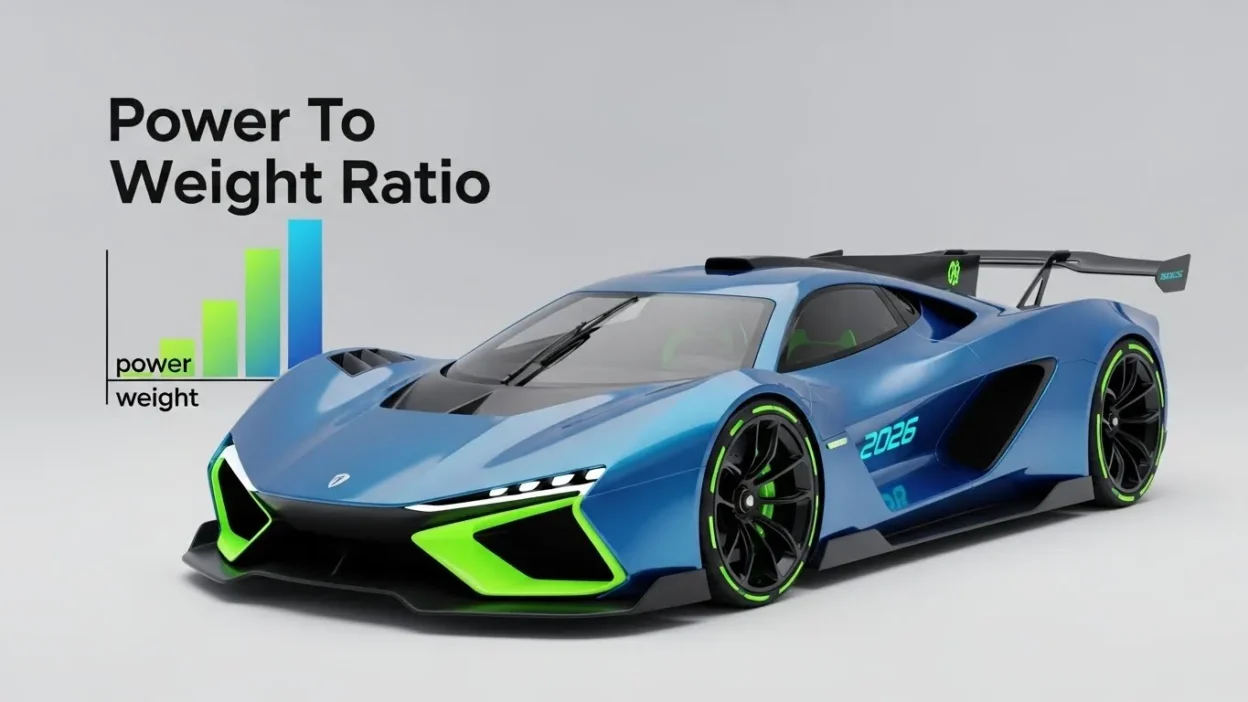
Power-to-weight ratio (PWR) is a fundamental metric that measures how much power an object or person can produce relative to its weight.
While it sounds technical, its applications are everywhere from cars and motorcycles to athletes and even aircraft.
In simple terms, it explains why a lightweight sports car can accelerate faster than a heavier sedan with the same engine, or why a cyclist’s performance uphill depends as much on their body weight as their strength.
Understanding PWR is not just about numbers; it’s about performance, efficiency, and optimization.
Engineers, athletes, and hobbyists alike use this ratio to compare capabilities, predict outcomes, and make smarter choices.
In this article, we’ll dive into the mechanics of power-to-weight ratio, explore its real-world applications, and show how a deeper understanding of this metric can help improve performance in vehicles, sports, and engineering projects.
Understanding the Basics of Power-to-Weight Ratio
At its core, power-to-weight ratio is a simple concept: it compares how much power an object can produce to how much it weighs. The formula is straightforward:Power-to-Weight Ratio=WeightPower
Power is typically measured in watts or horsepower (hp), while weight is measured in kilograms (kg) or pounds (lb). In vehicles, a higher PWR generally means quicker acceleration and better agility, while in sports, it often predicts an athlete’s ability to perform efficiently, especially in endurance or uphill scenarios.
It’s important to understand that PWR is different from raw power. A heavy car with a powerful engine might have more horsepower than a small sports car, but if its weight is proportionally higher, its acceleration may still lag behind. Similarly, a strong cyclist may produce significant power, but if their weight is high relative to their output, they may struggle on steep climbs.
Power-to-weight ratio also helps evaluate efficiency. For engineers, reducing weight while maintaining power can optimize performance without increasing fuel consumption or energy usage. For athletes, improving PWR can come from strength training, technique improvement, or bodyweight optimization.
In short, power-to-weight ratio is a performance metric that balances force and mass, giving a clearer picture than power or weight alone. It’s a key indicator in engineering, sports, and everyday performance decisions.
Power-to-Weight Ratio in Vehicles
In the world of vehicles, power-to-weight ratio is one of the most critical performance indicators. It determines how quickly a car, motorcycle, or even a truck can accelerate, maneuver, and handle different driving conditions. Simply put, a vehicle with a higher PWR can achieve better acceleration and responsiveness without necessarily having the most powerful engine.
For example, consider two cars with similar horsepower: a lightweight sports car and a heavier sedan. Even if both produce 300 hp, the sports car’s lower weight gives it a higher power-to-weight ratio, allowing it to reach higher speeds faster and handle corners more efficiently. Motorcycles demonstrate the same principle—lightweight bikes often outperform heavier cruisers in terms of agility and acceleration, despite similar engine outputs.
Electric vehicles (EVs) add an interesting twist to PWR. While batteries increase overall weight, the instant torque from electric motors can give EVs an exceptionally high effective power-to-weight ratio, which explains why many electric cars outperform their internal combustion counterparts in 0–60 mph sprints.
Power-to-weight ratio also guides vehicle design. Engineers optimize weight distribution, use lighter materials, and balance engine output to maximize efficiency without compromising safety. It’s not just about speed; a higher PWR improves overall driving dynamics, fuel efficiency, and even braking performance.
In short, whether it’s a sports car, motorcycle, or electric vehicle, understanding PWR helps explain why some vehicles feel faster, more agile, and more efficient than others, even when raw horsepower seems similar.
Power-to-Weight Ratio in Sports
Power-to-weight ratio is just as important in sports as it is in vehicles, especially in disciplines where strength, speed, and endurance intersect. In cycling, for example, PWR is measured in watts per kilogram (W/kg) and is a crucial predictor of performance, particularly during uphill climbs. A rider producing 400 watts at 80 kg has a PWR of 5 W/kg, while a lighter rider producing the same power at 70 kg reaches approximately 5.7 W/kg—demonstrating how weight influences efficiency even when power output is equal.
Runners and triathletes also benefit from understanding PWR. While raw strength and cardiovascular fitness are essential, body weight plays a significant role in endurance performance. Athletes with a favorable PWR can sustain higher speeds for longer periods, particularly in events involving elevation changes.
Even in strength sports like rowing, gymnastics, or weightlifting, power-to-weight ratio determines how effectively an athlete can move their own body or equipment. Coaches often use PWR to assess potential, design training programs, and identify areas for improvement.
Improving PWR in sports is a balance between increasing power and managing weight. Strength and conditioning programs target muscle efficiency, explosive power, and endurance, while careful attention to nutrition helps maintain optimal body mass.
Ultimately, power-to-weight ratio in sports highlights the importance of efficiency over raw strength. Athletes who optimize this ratio often outperform heavier or stronger competitors, proving that in many cases, less weight combined with sufficient power equals superior performance.
Engineering and Aerospace Applications
Power-to-weight ratio isn’t limited to vehicles and sports—it’s a cornerstone of engineering and aerospace design. In aviation, the equivalent metric is often called the thrust-to-weight ratio, which measures how much thrust an aircraft’s engines produce relative to its mass. A higher ratio means faster takeoff, quicker climbs, and greater maneuverability. Fighter jets, for example, have extremely high thrust-to-weight ratios, allowing them to accelerate rapidly and perform complex aerial maneuvers, while commercial airliners have lower ratios optimized for fuel efficiency and payload.
Rockets provide another dramatic example. During liftoff, a rocket must generate enough thrust to overcome Earth’s gravity. The power-to-weight ratio determines whether the rocket can lift off at all and how efficiently it reaches orbit. Engineers carefully calculate the balance between engine power and structural weight to maximize performance while minimizing fuel consumption.
Even in robotics and drones, power-to-weight ratio is critical. Lightweight materials combined with efficient motors allow drones to carry heavier payloads or fly longer distances without compromising stability. Similarly, in industrial machinery and mechanical design, understanding and optimizing PWR ensures devices perform efficiently while maintaining durability.
In all these applications, the principle is the same: higher power relative to weight translates to better performance. However, engineers must balance PWR with safety, structural integrity, and cost. By optimizing this ratio, aerospace designers, robotic engineers, and mechanical innovators can create systems that achieve peak efficiency without unnecessary energy waste or excessive material use.
Calculating and Improving Power-to-Weight Ratio
Calculating power-to-weight ratio is straightforward but immensely useful for analyzing performance. The basic formula is:Power-to-Weight Ratio=WeightPower
For vehicles, power is usually measured in horsepower (hp) or kilowatts (kW), and weight in kilograms (kg) or pounds (lb). For example, a car with 300 hp weighing 1,500 kg has a PWR of 0.2 hp/kg. In cycling or athletics, power is measured in watts, and weight in kilograms. A cyclist producing 300 watts at 70 kg has a PWR of approximately 4.3 W/kg.
Improving power-to-weight ratio can be approached in two ways: increasing power or reducing weight. In vehicles, this might involve engine tuning, performance upgrades, or using lightweight materials like carbon fiber. In sports, athletes focus on strength training to boost power output, alongside careful nutrition and bodyweight optimization to maintain efficiency.
However, trade-offs exist. Increasing power without reducing weight can strain components, reduce efficiency, or compromise control. Similarly, lowering weight excessively may weaken structural integrity or reduce endurance in athletes.
Practical strategies include:
- Incremental training to increase muscular power or stamina
- Diet and body composition management
- Optimizing materials and components in vehicles or machinery
- Regular measurement and testing to track improvements
By calculating and systematically improving power-to-weight ratio, engineers, athletes, and hobbyists can enhance performance efficiently, achieving better acceleration, agility, or endurance without unnecessary increases in raw power or weight.
Real-World Comparisons
Seeing power-to-weight ratio in action makes its importance clear. In vehicles, high-performance sports cars often demonstrate striking differences despite similar engine outputs. For example, a Porsche 911 Carrera produces around 379 hp and weighs roughly 1,500 kg, giving a PWR of about 0.25 hp/kg. Meanwhile, a Honda Civic Type R also produces significant power—around 315 hp—but its higher weight of 1,420 kg results in a slightly lower PWR. This difference helps explain why the Porsche accelerates faster and handles more responsively despite a relatively small increase in raw horsepower.
Motorcycles provide another compelling comparison. Lightweight supersport bikes like the Kawasaki Ninja ZX-10R achieve exceptional PWR, allowing rapid acceleration and nimble cornering. In contrast, heavier cruisers with similar engine output feel slower and less agile because their mass offsets the power.
In sports, elite cyclists highlight PWR in athletic performance. A professional Tour de France rider often maintains 6 W/kg during uphill sprints, compared to amateur cyclists averaging 3–4 W/kg. Even small differences in PWR can significantly affect climbing speed and endurance.
Athletes across disciplines also demonstrate PWR’s impact. A lightweight rower with high output can move a boat faster than a heavier competitor with similar strength, while sprinters with optimized PWR achieve quicker starts and sustained speed.
These examples illustrate a key principle: it’s not just raw power that matters, but the balance between power and weight. Understanding and optimizing this ratio explains why lighter, well-powered vehicles or athletes often outperform heavier ones with similar output.
Common Misconceptions About Power-to-Weight Ratio
Despite its importance, power-to-weight ratio is often misunderstood. One common misconception is that more power always means better performance. While raw horsepower or watts are important, they don’t tell the full story. A heavy car with a massive engine might have incredible power on paper, but if its weight is disproportionately high, it can accelerate more slowly than a lighter vehicle with less power. Similarly, an athlete with high absolute strength may struggle if their body weight reduces efficiency, especially in endurance or climbing scenarios.
Another misunderstanding is that lighter always equals faster or more efficient. Weight reduction improves PWR only if power output remains sufficient. Overemphasis on losing weight can compromise structural integrity in vehicles or reduce strength and endurance in athletes. For example, a cyclist who drops too much weight without maintaining power may see slower times rather than improvement.
Some people also confuse power-to-weight ratio with total efficiency. PWR measures potential for performance, but it doesn’t account for other factors like aerodynamics, traction, technique, or terrain. A lightweight sports car may have a high PWR, but poor aerodynamics can limit its top speed. Similarly, a cyclist with excellent PWR may struggle on technical descents if their handling skills are weak.
Finally, PWR is sometimes treated as a one-size-fits-all metric. In reality, optimal PWR varies depending on goals and context. Understanding these misconceptions ensures that athletes, engineers, and enthusiasts use PWR effectively, focusing on balance and context rather than just chasing bigger numbers or lighter weight.
Tools and Resources for Power-to-Weight Ratio
Understanding power-to-weight ratio is one thing, but measuring and optimizing it requires the right tools. Fortunately, there are plenty of resources available for both enthusiasts and professionals in vehicles, sports, and engineering.
For vehicles, online power-to-weight calculators allow you to input horsepower and weight to quickly determine a car’s PWR. Automotive websites and apps often include databases of cars with pre-calculated ratios, making comparisons easy. For more advanced analysis, software like Car Performance Simulation Tools helps engineers and hobbyists model how changes in weight or engine output affect acceleration, handling, and efficiency.
Athletes can also benefit from specialized tools. Cycling power meters measure real-time watts produced by a rider, which can be combined with body weight to calculate watts per kilogram. Apps like Zwift, TrainingPeaks, and Strava allow athletes to track performance metrics, including PWR, over time. Strength and conditioning programs can incorporate PWR calculations to optimize training, track progress, and prevent overtraining.
For aerospace and robotics, engineers use CAD and simulation software to model thrust-to-weight ratios, optimizing design and material selection before building prototypes. Lightweight materials, component placement, and engine output are all factored into these calculations.
Additionally, there are plenty of online tutorials, guides, and forums where enthusiasts share tips for improving PWR in both sports and vehicles. These resources make it easier to apply the concept practically rather than just theoretically.
By leveraging calculators, apps, and specialized software, anyone—from athletes to engineers—can measure, analyze, and improve power-to-weight ratio effectively, turning a theoretical metric into actionable performance gains.
Conclusion:
Power-to-weight ratio is more than just a technical metric—it’s a fundamental measure of performance, efficiency, and potential. From sports and cycling to cars, motorcycles, and even aircraft, understanding the balance between power and weight can explain why some performers or machines outperform others, even when raw power seems similar. It highlights the importance of efficiency over brute force, showing that optimizing weight and maximizing output often yields the best results.
For athletes, monitoring power-to-weight ratio can guide training, improve endurance, and help achieve competitive advantages.
Cyclists, runners, rowers, and other sports professionals rely on PWR to assess performance and make strategic improvements.
In vehicles, engineers use it to design cars, motorcycles, and EVs that accelerate faster, handle better, and operate more efficiently.
Even aerospace and robotics depend on this principle to ensure safety, efficiency, and optimal performance.
While it’s easy to focus on increasing power or reducing weight, the key lies in finding balance.
Understanding common misconceptions—such as assuming more power or less weight automatically leads to better performance ensures that decisions are both safe and effective.
Ultimately, power-to-weight ratio is a universal metric that bridges engineering, athletics, and everyday performance.
By calculating, analyzing, and optimizing PWR, anyone can make smarter choices, whether selecting a car, improving athletic ability, or designing efficient machines.
It’s a clear reminder that performance isn’t just about power or weight alone—it’s about the relationship between the two.

Hi! I’m Ella Johnson, the voice behind Crushlinez. I love sharing fun, flirty, and creative pick up lines to help you charm, laugh, and connect. On Crushlinez, I bring you the best lines for every mood, whether it’s cute, funny, or romantic. My goal is to make flirting fun, easy, and full of smiles—one line at a time!https://crushlinez.com/https://crushlinez.com/