
Losing weight isn’t just about cutting calories it’s about fueling your body the right way, and protein plays a starring role. Protein helps you feel full longer, preserves lean muscle during fat loss, and even boosts metabolism, making it a crucial part of any weight loss plan.
But how much protein do you actually need? That’s where a protein weight loss calculator comes in. By taking into account your weight, activity level, and personal goals, it provides a clear, tailored recommendation for daily protein intake.
If you’re trying to shed fat, maintain muscle, or optimize your workouts, knowing the right amount of protein can make all the difference.
In this guide, we’ll walk you through how to calculate your protein needs both manually and using a calculator explore the best protein sources, and share tips to help you reach your weight loss goals efficiently and sustainably.
Why Protein Is Crucial for Weight Loss
Protein is one of the most important nutrients when it comes to losing weight effectively. Unlike fats and carbohydrates, protein has a high thermic effect, meaning your body burns more calories digesting it. This helps slightly increase your metabolism while supporting your weight loss efforts. But perhaps the most significant benefit of protein is its ability to promote satiety. High-protein meals make you feel fuller for longer, reducing cravings and helping you stick to a calorie-controlled diet without feeling deprived.
Another key reason protein is essential for weight loss is its role in preserving lean muscle mass. When you lose weight, especially on a calorie deficit, there’s a risk of losing muscle along with fat. Maintaining muscle is critical because it helps your body continue burning calories efficiently, even at rest. Without enough protein, your body may break down muscle for energy, slowing down fat loss and making it harder to maintain your results.
Protein also supports exercise performance and recovery, allowing you to stay active and build strength while dieting. Whether your goal is to lose fat, tone your body, or maintain muscle during weight loss, ensuring sufficient protein intake is non-negotiable. Using a protein weight loss calculator can help you determine exactly how much protein your body needs each day, creating a personalized strategy that maximizes fat loss while protecting muscle.
How to Use a Protein Weight Loss Calculator
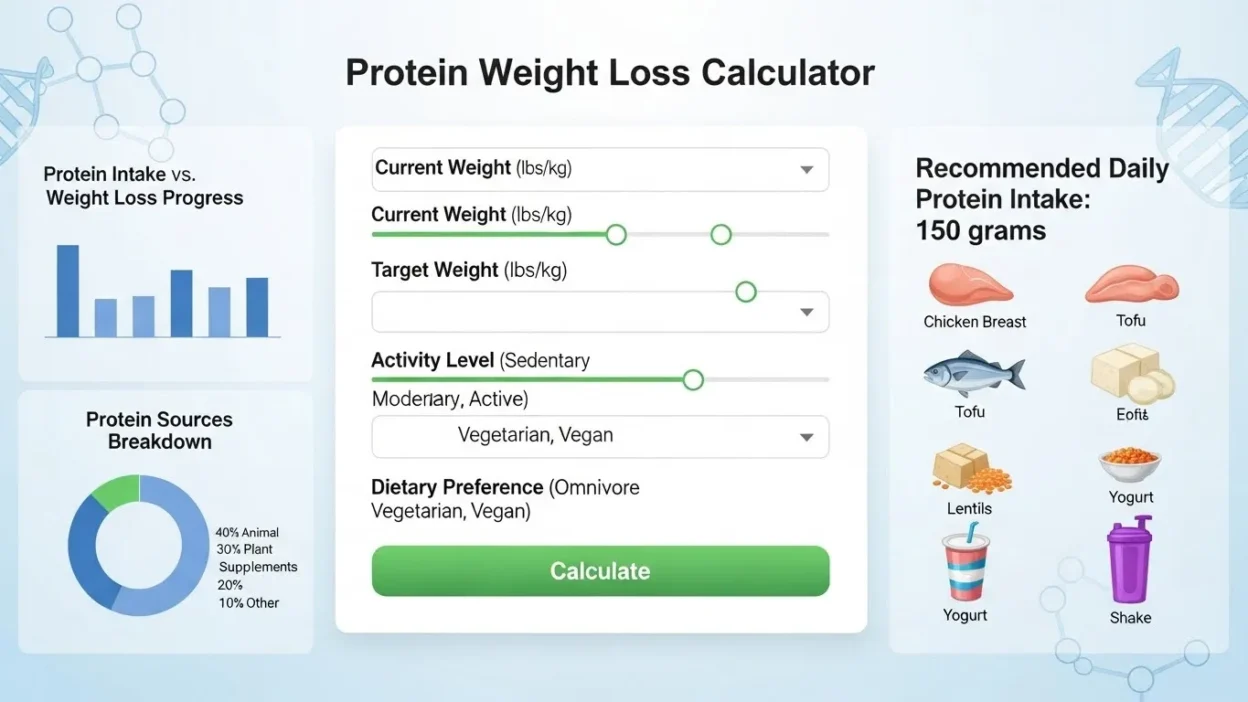
A protein weight loss calculator makes it easy to determine exactly how much protein your body needs to support fat loss while maintaining muscle. These calculators are designed to consider several personal factors, such as your weight, age, gender, activity level, and weight loss goals. By entering this information, you receive a tailored daily protein recommendation, usually expressed in grams per day or grams per meal.
To use a protein calculator effectively, start by inputting your current body weight. Some calculators also allow you to enter your goal weight, which can help adjust protein needs as you progress. Next, select your activity level—sedentary, moderately active, or highly active. Since active individuals require more protein to support muscle repair and growth, this step ensures the calculation is personalized. Finally, choose your goal, such as fat loss, muscle maintenance, or body recomposition.
Once you receive your protein target, you can plan meals around it. For example, if your calculator recommends 120 grams per day, you might divide this across three main meals and two snacks to optimize absorption and maintain satiety. Pairing the calculator’s recommendation with whole-food protein sources, such as lean meats, dairy, legumes, and plant-based options, ensures a balanced diet. Regularly using a protein calculator allows you to adjust your intake as your weight, activity level, or goals change, helping you stay on track for sustainable weight loss.
Manual Protein Calculation Methods
While a protein weight loss calculator is convenient, it’s helpful to know how to calculate your protein needs manually. This gives you flexibility and a deeper understanding of your nutritional requirements. The most widely accepted guideline for weight loss is 1.6 to 2.2 grams of protein per kilogram of body weight per day. This range helps preserve lean muscle while supporting fat loss. For those using pounds, this translates to roughly 0.73 to 1.0 grams of protein per pound of body weight.
To calculate your protein intake manually, start with your current body weight. For example, a 70 kg (154 lbs) person aiming for fat loss would multiply their weight by 1.8 grams per kg. That equals 126 grams of protein per day. Active individuals or those performing strength training may lean toward the higher end of the range to support muscle recovery.
You can also adjust protein intake based on activity level. Sedentary individuals may use the lower end (1.6 g/kg), moderately active individuals around 1.8 g/kg, and highly active or strength-training individuals up to 2.2 g/kg. If you have specific goals, such as muscle gain while losing fat, aiming closer to 2 g/kg ensures adequate protein for repair and growth.
For convenience, consider creating a protein chart or table listing your weight and corresponding protein range. This makes it easy to track intake and plan meals without constantly recalculating. Combining manual calculations with real tracking ensures accuracy, helping you stay consistent in achieving your weight loss goals.
Protein Needs by Weight Loss Goals
Your protein requirements can vary depending on your specific weight loss goal, whether it’s fat loss, muscle preservation, or body recomposition. Understanding these differences helps you tailor your intake for optimal results.
1. Fat Loss:
When your primary goal is losing fat, a higher protein intake is crucial. Consuming 1.6–2.2 grams per kilogram of body weight helps preserve lean muscle while in a calorie deficit. Protein also increases satiety, which reduces overeating and supports a sustainable fat-loss plan. For example, a 70 kg (154 lbs) individual aiming for fat loss should consume approximately 112–154 grams of protein daily.
2. Muscle Preservation During Weight Loss:
For those focused on maintaining or building muscle while losing fat, slightly higher protein intakes—closer to 2.0–2.2 g/kg—are recommended. Combining this with strength training ensures your body has enough amino acids to repair and build muscle, preventing strength loss and supporting a toned appearance.
3. Maintenance or Body Recomposition:
If your goal is maintaining current weight while optimizing body composition, moderate protein intake of around 1.6–2.0 g/kg is ideal. This supports muscle health, keeps metabolism active, and ensures your body efficiently uses calories from both protein and other macronutrients.
By aligning protein intake with your goal, you can maximize results. Using a protein weight loss calculator or these manual ranges makes it easier to track daily intake and adjust as your weight, activity level, or goals change. Pairing proper protein with balanced nutrition and consistent exercise ensures sustainable, long-term results.
Best Protein Sources for Weight Loss
Not all protein is created equal, and choosing the right sources is key for effective weight loss. High-quality protein provides essential amino acids, promotes satiety, and supports muscle preservation. A mix of animal-based and plant-based proteins ensures variety, taste, and nutritional balance.
Animal-Based Protein:
Lean meats, poultry, fish, and eggs are excellent sources. Chicken breast, turkey, lean beef, and fish like salmon or tuna are low in fat but high in protein. Eggs and low-fat dairy, including Greek yogurt and cottage cheese, also provide protein along with important nutrients like calcium and vitamin B12.
Plant-Based Protein:
For vegetarians or those seeking plant-based options, legumes (lentils, beans, chickpeas), tofu, tempeh, edamame, and quinoa are great choices. Nuts and seeds, though higher in fat, contribute protein and healthy fats when consumed in moderation. Combining different plant proteins ensures a complete amino acid profile.
Protein Supplements:
Whey, casein, or vegan protein powders can help meet daily protein goals, especially for individuals with busy lifestyles or higher needs due to training. They are convenient and versatile for shakes, smoothies, or adding to recipes.
Practical Tips:
- Spread protein intake evenly across meals to maximize absorption and satiety.
- Aim for 20–30 grams per meal as a practical target for most adults.
- Include a mix of whole foods and, if needed, supplements to reach your calculated protein goal.
By choosing high-quality protein sources, you support fat loss, maintain muscle, and make sticking to a calorie-controlled diet much easier.
Common Mistakes in Protein Intake
Even with a protein weight loss calculator, many people make mistakes that limit the benefits of protein for weight loss. Being aware of these common pitfalls can help you optimize results.
1. Overestimating Protein Needs:
More protein isn’t always better. Consuming excessively high amounts doesn’t accelerate fat loss and may stress the kidneys over time, especially in individuals with pre-existing kidney issues. Stick to recommended ranges, typically 1.6–2.2 g/kg of body weight for fat loss and muscle preservation.
2. Ignoring Carbs and Fats:
Focusing solely on protein can create an unbalanced diet. Carbohydrates provide energy for workouts, and healthy fats support hormone regulation and overall health. A balanced diet with proper protein, carbs, and fats ensures sustainable weight loss.
3. Not Spreading Protein Throughout the Day:
Consuming all your protein in one meal reduces absorption efficiency and satiety benefits. Aim to distribute protein evenly across meals and snacks—20–30 grams per meal is ideal for most adults.
4. Relying Solely on Supplements:
While protein powders and shakes are convenient, whole foods offer additional nutrients, fiber, and variety. Supplements should complement, not replace, a balanced diet.
5. Neglecting Activity Level:
Protein requirements depend on your activity. Sedentary individuals need less than highly active or strength-training individuals. Not adjusting intake for activity can slow muscle preservation and fat loss progress.
Avoiding these mistakes ensures that your protein intake effectively supports fat loss, muscle retention, and overall health. Using a protein calculator and monitoring your meals helps prevent these errors while keeping your nutrition on track.
(FAQs)
1. How much protein do I need to lose weight?
For most adults aiming for fat loss, the recommended intake is 1.6–2.2 grams per kilogram of body weight per day. This range helps preserve muscle and supports satiety while in a calorie deficit. Adjust based on activity level and personal goals.
2. Can I eat too much protein?
Consuming more protein than your body needs doesn’t accelerate fat loss and can strain the kidneys over time in individuals with pre-existing kidney conditions. Staying within recommended ranges ensures safe and effective results.
3. Is protein timing important?
While total daily intake matters most, spreading protein across meals improves absorption, supports satiety, and helps maintain muscle. Aim for 3–5 protein-rich meals or snacks per day.
4. What if I’m vegetarian or vegan?
Plant-based sources like lentils, beans, tofu, tempeh, nuts, seeds, and quinoa provide protein. Combining different sources ensures a complete amino acid profile. Supplements such as pea, rice, or soy protein powders can also help meet daily requirements.
5. How do I track protein intake effectively?
Use a protein weight loss calculator, mobile apps like MyFitnessPal, or food journals to log meals. Measuring portions and reading nutrition labels ensures accuracy and helps adjust intake as weight, activity, or goals change.
6. Can protein help reduce cravings?
Yes. Protein increases satiety hormones, helping control appetite and reduce snacking, making it easier to stick to a calorie-controlled diet.
By addressing these common questions, you can use protein strategically to support fat loss, maintain muscle, and achieve sustainable results.
Conclusion
Protein plays a vital role in weight loss, supporting fat loss, preserving lean muscle, and keeping you full between meals. Whether you are just starting your weight loss journey or are already on a calorie-controlled plan, understanding your protein needs is crucial for success.
A protein weight loss calculator simplifies this process by providing personalized recommendations based on your weight, activity level, and goals, ensuring that you get the right amount of protein each day without guesswork.
By combining accurate calculations with high-quality protein sources—such as lean meats, fish, eggs, dairy, legumes, and plant-based alternatives—you can build a diet that not only supports fat loss but also maintains energy, strength, and overall health.
Remember, protein is most effective when consumed consistently throughout the day, paired with a balanced diet that includes carbohydrates and healthy fats.
Avoid common mistakes like overeating protein, relying solely on supplements, or neglecting activity levels.
Monitoring your intake, adjusting as your weight or goals change, and using practical tools like a protein calculator can make your weight loss journey more efficient and sustainable.
Incorporating these strategies empowers you to take control of your nutrition, maximize fat loss, and maintain muscle while enjoying a flexible and satisfying diet.
Start using a protein weight loss calculator today, plan your meals around your personalized protein target, and take the guesswork out of your weight loss journey for long-lasting results.

Hi, I’m Maya Angelou, and I’m thrilled to welcome you to Crushlinez! I created this space because I love helping people express themselves with clever, funny, and flirty lines.